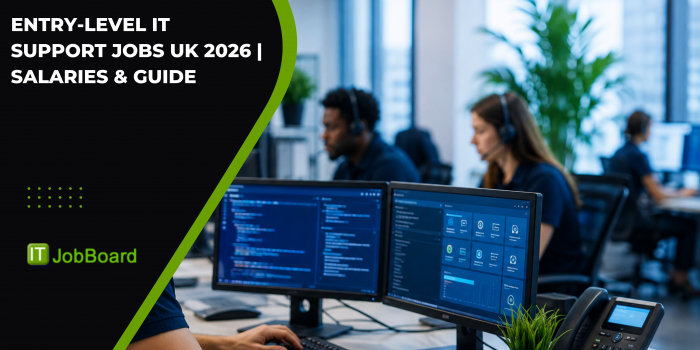
Helpdesk jobs are the backbone of IT service delivery. Every organisation that depends on technology — which is to say, virtually every organisation in the UK — needs skilled professionals to keep systems running and end users productive. Whether you are a first-line support analyst handling password resets and connectivity issues, or a third-line engineer resolving complex enterprise platform faults, the service desk offers a clear and rewarding career pathway with strong demand across all industries.
Authority in helpdesk environments flows through knowledge and consistency. The analyst who resolves tickets faster, documents solutions more thoroughly, and communicates with users more empathetically will rise faster — and will be better placed to transition into specialist, management, or project roles over time. This guide covers everything you need to know about helpdesk careers in the UK.
Most IT support careers follow a tiered model. 1st Line Support handles the highest volume of incidents: password resets, software installation, connectivity troubleshooting. 2nd Line Support deals with escalations that require deeper investigation — Active Directory administration, VPN configuration, application errors. 3rd Line Support involves specialist expertise: server administration, network infrastructure, security investigation, or enterprise software configuration.
Above the technical tiers sits the Service Desk Manager or IT Service Manager role, which requires strong ITIL knowledge, team leadership ability, and the capacity to report on key performance indicators such as mean time to resolution (MTTR), first-call resolution rate, and customer satisfaction scores.
Technical competency is a given — but communication skills are equally critical. End users are rarely technical, and the ability to explain complex issues in plain language, manage expectations under pressure, and close tickets with the user genuinely satisfied is what separates a good analyst from a great one. Written communication matters too: every ticket you close is a knowledge artifact that could help a colleague resolve the same issue in future.
On the technical side, employers expect familiarity with the Microsoft 365 ecosystem (Teams, Outlook, SharePoint), Active Directory, remote support tools such as TeamViewer or SCCM, and ITSM platforms like ServiceNow or Freshservice. Exposure to ITIL processes — particularly incident management, problem management, and change management — is expected from 2nd Line upward.
1st Line IT Support salaries typically range from £22,000 to £28,000 in the regions and £26,000 to £35,000 in London. 2nd Line Support commands £28,000 to £40,000 nationally, while 3rd Line or senior support engineers earn £40,000 to £55,000. Service Desk Managers earn £45,000 to £65,000 depending on team size and sector. Contract day rates for experienced 2nd and 3rd line analysts range from £200 to £350 per day.
For entry-level candidates, CompTIA A+ is the most recognised vendor-neutral certification and signals foundational competence to employers. CompTIA Network+ follows naturally for those interested in networking. Microsoft certifications — particularly the MS-900 (Microsoft 365 Fundamentals) and MD-102 (Endpoint Administrator) — are valued by organisations heavily invested in Microsoft infrastructure. ITIL 4 Foundation is beneficial from 2nd Line upward and essential for service management roles.
The service desk is an excellent launchpad. The breadth of exposure — hardware, software, networking, security, user behaviour — gives helpdesk professionals a uniquely broad understanding of IT that specialists lack. Many successful infrastructure engineers, cyber security analysts, and systems analystshttps://www.itjobboard.co.uk/categories/1255/systems-analyst-jobs/Cisco jobshttps://www.itjobboard.co.uk/categories/1229/cisco-jobs/, often recruit from 2nd and 3rd Line backgrounds where candidates have hands-on experience with switches, routers, and firewalls.
If you are ambitious, document your career development plan from day one. Keep a log of complex issues you have resolved, certifications you have earned, and improvements you have made to support processes. This evidence base will prove invaluable when you apply for your first senior or specialist position.